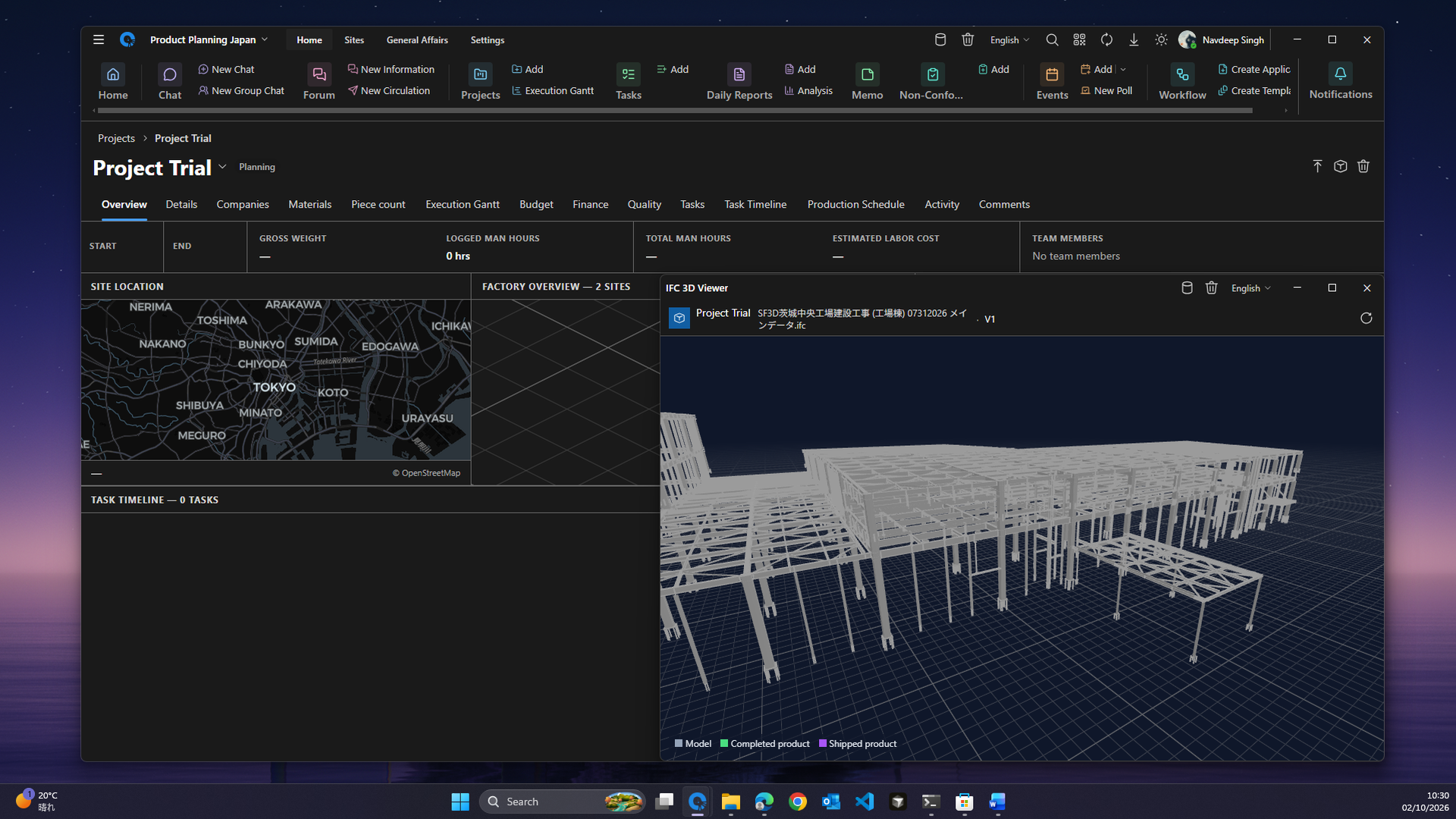



Traditional factory monitoring relies onmanual patrols and paper-based records. While this works fine for small, simpleoperations, it struggles to keep up with busy sites and multiple locations.Staff spend hours walking the floor, writing down what they see, and copyingthe same numbers into different forms. Every extra form means extra time, andextra time means extra cost.
Manual reporting is something that happensevery single day in real time. As sites grow busier and teams get spread acrossmore locations, businesses can't afford to keep relying on manual, paper-basedchecks. Simple digital tools now make it possible to track work as it happens,cutting out repeated manual entry.
The evolution of factory reporting atSato Sangyo
Traditional factory reporting is builtaround daily walk-throughs and handwritten logs. Someone checks the floor,writes it down, then someone else copies that information into a process chart,and again into a progress sheet. While this is fine for a single small site, itquickly becomes a burden once you have several locations and many staff doingthe same checks every day.
The shift to digital reporting changes howteams work. Instead of writing the same information three times by hand, staffrecord it once and the system shares it automatically. This change is driven bya few simple facts: more sites to manage, more people involved in daily checks,and a growing need for accurate, up-to-date records without the manualre-typing.
Challenge
Three everyday tasks were taking up a lotof staff time across the company's three sites (Head Office, Sanwa, andYasuzuka at Sato Sangyo):
- Factory patrol checks: 11 staff spent 10 minutes each, every day, walking the floor and checking visually.
- Process chart entry: One person spent 30 minutes a day writing results into the process chart.
- Progress sheet entry: One person spent another 10 minutes a day filling in the progress sheet.
Added together, this came to about 150minutes of work every single day, just for basic checks and paperwork. Over afull year, this added up to roughly 941 hours of total work — time that couldhave gone toward more valuable tasks.
Solution
The company introduced Qibousys to cut downon repeated manual work
- Patrol checks were made faster, cutting the time needed per person from 10 minutes to 5 minutes.
- Process chart entries were automated, dropping from 30 minutes a day to almost zero.
- Progress sheet entries were also automated, dropping from 10 minutes a day to almost zero.
Instead of writing the same numbers downthree separate times, staff now record information once, and the system takescare of the rest. This also made it possible to see, in one place, how muchtime and money the changes were saving.
The Results
The impact was clear and easy to measure
- Daily time saved: 95 minutes per day across the three tasks.
- Annual time saved: about 783 hours a year — equal to roughly 104 working days (based on a 7.5-hour working day).
- Total working time: cut from about 941 hours a year to just 158 hours a year, an 83% reduction.
By replacing manual, repeated paperworkwith a simple digital process, the team freed up nearly three and a half monthsof working time each year — time now spent on higher-value work instead ofduplicate data entry.